

From validation strategy to testing, documentation, and ongoing compliance, Patero provides hands-on computer system validation services for pharmaceutical and biotechnology organizations.
Our P.Eng.-led team brings 25 years of validation experience to help you implement and maintain GxP computerized systems with confidence.
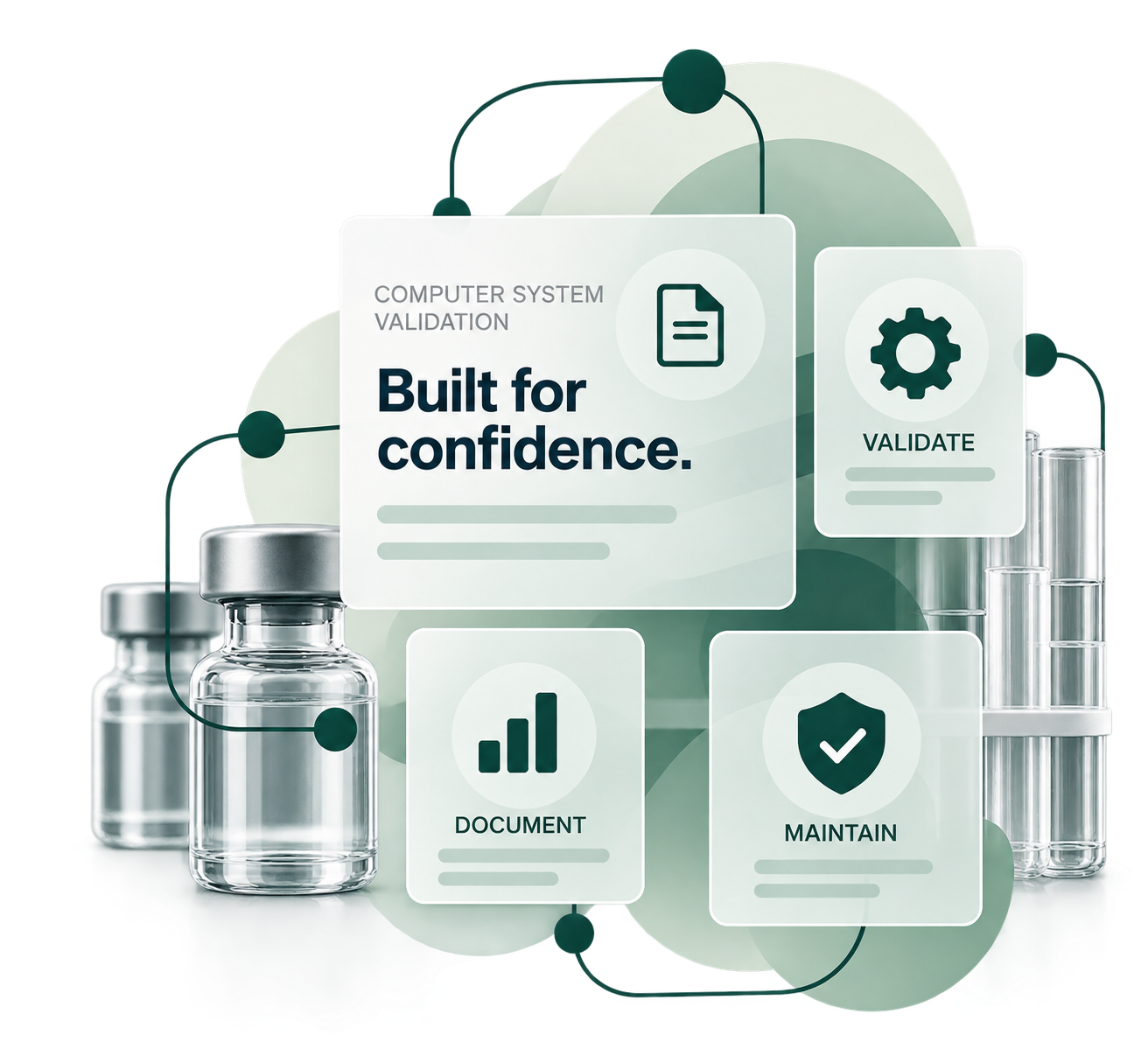
Whether you need a complete validation program or support on a single project, our team works alongside yours. We start by assessing your systems and their regulatory impact, then plan, test, document and keep them in a validated state.
We validate the computerized systems that support product quality, manufacturing, laboratory operations and regulatory compliance.
Electronic quality workflows and regulated records.

Manufacturing, supply chain, and inventory processes.

Document control and regulatory submission platforms.

Laboratory information and chromatography data systems.

Product identification and traceability systems.

HVAC and GxP-relevant environmental systems.

Maintenance and equipment management systems.

Risk-based validation of regulated spreadsheets.

Don't see yours? Tell us what it does and we'll tell you what validation it needs.
Validation and data integrity don't just protect your systems—they protect your business.
Discuss your project↗ You're rolling out a new GxP or SaaS system
Build validation and data integrity into your implementation from day one.
◇ You're unsure what validation is needed
Define a right-sized approach based on intended use and risk.
◈ You need to address data integrity gaps
Find and fix audit trail, access control and documentation weaknesses.
+ You've got the strategy but need extra hands
We take on protocols, testing, evidence and project delivery.
▤ You're working with legacy systems
Assess existing records and develop remediation plans.
◎ You're preparing for an inspection
Prioritize gaps and prepare defensible validation evidence.
Our framework focuses effort where it matters most while maintaining the documentation and traceability required for regulated operations.
Establish the strategy, responsibilities, and user requirements.
Support software selection and evaluate supplier evidence.
Assess critical functions and scope validation based on risk.
Translate requirements into traceable specifications.
Develop appropriate IQ/OQ/PQ protocols, SOPs, and work instructions.
Execute testing, document evidence, and investigate deviations.
Consolidate evidence in the validation report and confirm data integrity controls.
Change control, periodic review and ongoing support.
Computer system validation (CSV) is the documented process of demonstrating that a computerized system consistently performs as intended and is suitable for its regulated use.
For systems used in regulated pharmaceutical and biotechnology activities, applicable laws and regulations can require documented validation. The scope depends on the system’s intended use and its impact on product quality, patient safety, and data integrity.
Validation does not end at go-live. Systems must remain in a validated state throughout their lifecycle through appropriate change control, periodic reviews, testing, and documentation as they evolve.
Approaches you will hear about:
Traditional CSV
Documented requirements, specifications, qualification, testing and traceability for each in-scope system.
Computer Software Assurance (CSA)
the FDA's risk-based approach, focusing assurance effort on critical functions and intended use
Validation 4.0
Lifecycle thinking for modern, connected, and cloud-based technologies.
AI governance in regulated environments
A separate discipline for documenting and governing AI-enabled systems. Learn More
Practical answers to common questions about regulated systems and validation.
Implementing a new GxP system or addressing data integrity gaps? Tell us about your project.
